
What Gen Z residents actually want from a high-rise
Gen Z resident engagement is no longer a nice-to-have for high-rise communities. It is becoming a retention strategy, a resident experience signal, and an operational metric. If your building’s “community strategy” is a newsletter nobody reads and a Facebook group that mostly turns into parking complaints, you don’t have a community strategy. You have a disconnected community experience.
Gen Z is becoming an increasingly important tenant group in urban high-rise communities. As new graduates and young professionals enter the rental market, they are evaluating buildings differently than previous generations. Lease terms, square footage, and location still matter but so does the daily experience of living in the building. The question is no longer just “Is the unit nice?” It is also: “Does this building feel connected, convenient, and alive?”
This isn’t only about amenity checklists. Buildings that win Gen Z retention aren’t the ones with the nicest gym. They’re the ones where residents actually run into each other, where something is always happening, and where the app they open every morning connects them to the community within the building as it connects them to maintenance requests.
Property managers who treat community engagement as a nice-to-have, something to consider only once operations are stable, are misreading the market. For Gen Z, community engagement is an operational metric. Weak community equals weak retention. Weak retention equals turnover cost, vacancy cost, and a building that’s harder to lease the next time.
These numbers point to a simple reality: when a resident app is accessible and meaningful to daily life, adoption follows. The opportunity for property teams is not just to launch another resident app, but to create a digital habit that connects residents to services, communication, and community in one place.
More than a living space: experience, lifestyle, community
Gen Z grew up with frictionless digital experiences. Amazon, Uber, DoorDash, Spotify every product they use anticipates their needs before they articulate them. When they sign a lease, they carry those expectations with them. What does that actually mean? It starts with how they define “home.” Research consistently shows that Gen Z places higher value on social connection and a sense of belonging than previous renter generations.This is especially relevant in multifamily communities, where younger renters are often building new routines, new social circles, and new expectations around what “home” should provide beyond the unit itself. They’re more likely to have moved for work without an established social network in that city. They’re more likely to be working hybrid or remote, spending more time not just in the unit but in the building whether it’s a morning workout at the gym, class at the yoga studio, working at the common work space, or using the pet spa.
A building that treats them as tenants in boxes fails this cohort at the most basic level. A building that actively creates the conditions for connection structured and unstructured, digital and in-person becomes something they’ll pay a premium to stay in.
The shift property managers need to make is conceptual. Stop thinking of community features as a marketing differentiator. Start thinking of them as infrastructure for the resident experience just as essential as a working elevator or a clean lobby.
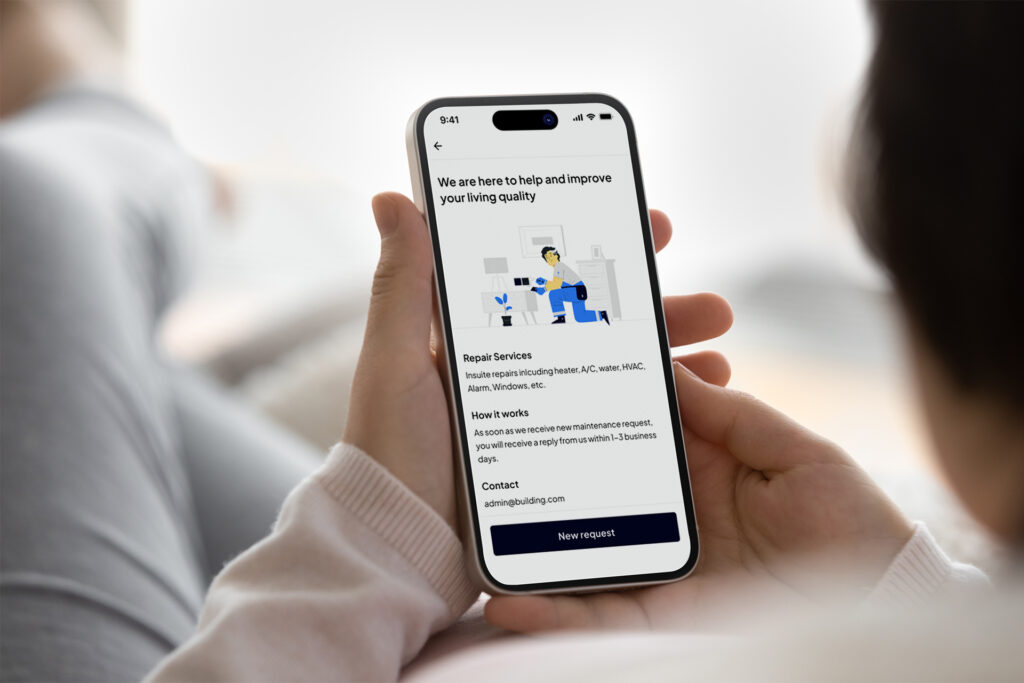
Unlike platforms that treat community as a separate add-on, LIV brings resident engagement into the same platform residents already use for everyday building needs. Events, marketplace, announcements, amenity bookings, maintenance, incident report, and communications live in one connected experience. Residents do not need a separate group chat, paper sign-up sheet, or external platform for community participation.
Events and social groups: replacing WhatsApp chaos
Every property manager reading this has dealt with the WhatsApp group problem. A well-intentioned resident creates a building chat group. For a few weeks it’s useful if someone finds a lost key, someone recommends a plumber. Then the parking complaints start. Then management gets added and suddenly every operational issue lands in a thread with 180 members, emojis, and no resolution pathway.
WhatsApp groups can create connections, but they are not community infrastructure. Without structure, they quickly become noise without guardrails to protect data privacy or security.
LIV’s Events feature allows on-site staff to create and manage community events with RSVP and payment options. If the community approves, the LIV app can be configured to enable resident- initiated events or social groups. A rooftop yoga session, lobby coffee hour, playdates for kids, or quarterly barbecue can be posted directly inside the app, giving residents one simple place to discover what is happening and confirm attendance.
This matters operationally, not just socially. When residents organize inside a platform rather than in parallel WhatsApp threads, management has visibility and a digital time stamped records to reference.
Gen Z is not antisocial, the stereotype is wrong. They are highly motivated to build local communities, especially in urban settings where they’ve moved without an established network. What they reject is friction. They won’t attend a paper-sign-up barbecue. They will RSVP through an app in 8 seconds while waiting for the elevator. Remove the friction, and the community follows.
Resident marketplace: replacing Facebook Marketplace with something residents trust
Gen Z buys and sells secondhand by default. Vinted, Depop, Facebook Marketplace the secondhand economy is the default commerce layer for this generation. They’re not waiting until they need to move to declutter. They’re selling last year’s coffee table and buying someone else’s vintage lamp on a Tuesday afternoon.
Facebook Marketplace, however, is a trust problem. Selling to or buying from a stranger 40km away carries real risk. Meeting an unknown buyer in a parking lot, receiving payment from someone you’ve never verified are friction points that Gen Z, who grew up reading about online scams, actively avoids.
A building-internal marketplace solves this entirely. When the seller is your neighbour three floors up, someone with a verified lease, a real name tied to a real unit the transaction is inherently lower risk. You can hand off the item in the lobby. The trust that makes commerce comfortable is already built in.
The operational upside for property managers is meaningful. Every time a resident uses the marketplace, they’re in the app. Every time they’re in the app, they encounter building updates, see the events calendar, check their maintenance ticket status. The marketplace is a daily-habit driver that keeps residents connected to the building’s communication infrastructure not because management pushed them there, but because they chose to be there.
Feedback, updates, and resident voice: making residents feel heard
The most common thing Gen Z residents say when they leave a building is not “the rent was too high.” It’s “management never listened.” Not that management was unresponsive to maintenance tickets, or complaints, but residents often feel they don’t have a formal channel to share their feedback nor is the management willing to hear opinions worth soliciting.
The bar here is lower than many teams realize, which makes missed opportunities especially costly. Sending a two-question poll about whether to add a new yoga class, or asking residents to vote on the theme for the holiday event, takes less than 5 minutes to set up.
Gen Z specifically values participatory culture. They grew up in social environments where engagement is the currency. A building that solicits their input speaks their language in a way that older residents may appreciate but don’t require in the same way.
What this means for property managers managing real operations
A concern worth naming directly: property managers who’ve been in the industry for a decade sometimes react to “Gen Z engagement” content with mild exasperation. They didn’t sign up to run a social club. They have maintenance queues, financial compliance obligations, and a board that wants to talk about reserve funds.
This framing misses the point entirely. The community features described above are not additional programs. They’re automation that replaces manual effort. They’re not something a property manager has to build or run manually. They’re systems a platform can support while the property manager focuses on operations.
There is also a direct operational dividend from strong community engagement. Residents who feel connected to their building submit fewer emotional complaints. They give management the benefit of the doubt when a maintenance issue takes longer than expected. Engaged residents create less friction for property management staff, not more.
The inverse is also true. Disengaged residents who have no relationship with the building beyond transactional interactions escalate faster. They leave harsher reviews. They organise grievances in private channels management can’t see. They churn at the first available opportunity. The community layer is, in the most operational sense, a friction-reduction tool.
The communities that win Gen Z retention
The picture is clear. Gen Z residents evaluate buildings on a combination of factors that property managers trained in an older model of the industry may underweight: digital experience quality, sense of community, responsiveness, and whether the building makes their life easier or harder.
They are more willing than prior cohorts to pay a moderate premium for a community with a vibrant culture. They are less tolerant of friction, slow responses, clunky apps and no community infrastructure than a cohort that grew up accepting those conditions as normal.
Community engagement is not a soft metric. It’s a retention mechanism, a friction-reduction tool, and increasingly, a competitive differentiator in markets where Gen Z residents have genuine choice. The buildings that treat it as infrastructure not as a nice-to-have, not as a future project are the ones that will hold occupancy when the market softens and win renewals when they don’t have to.