
Silence is liability: Fixing the maintenance signal problem in property management
Most maintenance complaints don’t start because a repair is slow. They start because the resident has no idea what’s happening.
A pipe bursts on the 14th floor. The building manager calls a plumber. Parts are ordered. The timeline is 48 hours. Reasonable. But the 60 residents on floors 12 through 16 who lost water pressure don’t know any of that. They know one thing: nobody told them anything.
Within hours, the property manager’s phone rings with the same question from different units. The concierge gets stopped in the lobby. Someone posts in the building’s group chat. A board member emails asking for an update. One repair creates dozens of conversations, and every conversation pulls staff away from the actual fix.
This is the maintenance signal problem. The issue is rarely the repair timeline. It’s the gap between what’s happening and what residents know is happening.
The escalation pattern no one budgets for
Across condo buildings and rental apartments, maintenance issues follow the same cycle when communication breaks down:
Silence leads to guessing, which leads to frustration, which leads to escalation, which leads to formal complaints, bad reviews, or legal exposure.
The trigger is almost never the delay itself. Residents can tolerate a 5-day repair if they understand why it’s taking 5 days. What they can’t tolerate is silence. Silence forces them to fill in the blanks, and the story they create is almost always worse than reality.
For condos, where maintenance covers common areas like elevators, lobbies, parking garages, and amenity spaces, a single issue can affect hundreds of residents simultaneously. An elevator outage in a 40-storey tower doesn’t generate one inquiry. It generates dozens. And if each of those inquiries gets a slightly different answer from a different staff member, speculation spreads.
Rental apartments face the same pattern with an added layer. In-unit maintenance (plumbing, HVAC, appliance repairs) means the resident is waiting inside the space where the problem exists. The emotional urgency is higher. The tolerance for silence is lower.
Why "In progress" doesn't work
Most property management platforms offer status labels for work orders. Assigned. In progress. Waiting on parts. On the surface, these look like communication. They aren’t.
A status label answers the question “where is this?” but residents aren’t asking that. They’re asking “what happens next?” and “when will I hear from you again?”
If a resident checks their portal, sees “In progress,” and still feels the need to call the office, the status failed. It gave them data without giving them certainty.
The same applies to email updates. Sending a message that says “We’re working on it” doesn’t reduce follow-ups. It creates a new question: working on it how? For how long? What’s the next step?
Vague updates produce more inbound volume, not less. They give the appearance of communication while delivering none of the clarity that residents actually need.
The real cost of scattered communication
When maintenance updates live in email inboxes, text threads, phone calls, and hallway conversations, the operational burden multiplies.
One resident hears “soon.” Another hears “waiting on a vendor.” A third hears nothing at all. The property manager ends up answering the same question five different ways. The concierge relays a version they overheard. A board member gets a different summary. Now the building has five versions of one story, and staff spend more time managing the narrative than managing the repair.
This is expensive. Not in a line-item-on-a-budget way, but in burned hours, frustrated staff, and eroded trust. Property managers report spending 20 to 40 hours per month on administrative tasks that could be automated, and a significant portion of that time goes to follow-up communication that structured systems would eliminate.
The 4-line heartbeat update

The fix isn’t more messaging. It’s structured messaging with a defined rhythm.
We call this the heartbeat update. Every maintenance communication, whether it’s a work order acknowledgment or a building-wide notice, follows four lines:
| What happened | A clear, one-sentence description of the issue. No jargon. |
| What we're doing | The specific action being taken. Not "we're working on it" but "a licensed plumber has been dispatched and is on site." |
| What to expect | The realistic impact on the resident. Which areas are affected, what's temporarily unavailable, what they should or shouldn't do. |
| Next update by | A specific date and time. Even if nothing changes by then, the resident knows exactly when they'll hear from you again. |
The last line is the one that matters most. “Next update by” is the sentence that stops follow-ups. It replaces uncertainty with a timestamp. Even if the repair hasn’t progressed, the resident knows the communication hasn’t stopped. That’s the difference between silence and signal.
This structure works for both common-area issues that affect the whole building and individual unit repairs in rental properties. The scope changes. The format doesn’t.
What this looks like at scale: Hillside West, Vancouver
Hillside West is a two-tower, 43-storey condominium complex in Vancouver with 892 units. Concord Pacific developed it. The strata council manages a property with amenities including a party room, theater, rooftop patio, pet grooming station, EV charging, and visitor parking. It’s a busy operation.
In the first five months after implementing a structured maintenance communication system through LIV, the property processed 199 maintenance requests. 195 were resolved, a 98% completion rate, with an average resolution time of 4 days. The most common categories were general building issues (118 requests), followed by heating and cooling (37), electrical (23), and water or pipeline problems (20).
The operational results went beyond ticket completion. The property saw a 40% reduction in resident phone calls, replaced by in-app communication and AI-assisted chat. Administrative staff saved an average of 40 hours per month that had previously gone to manual follow-ups, status updates, and reconciling information across disconnected channels.
Resident adoption was immediate. 91% of residents downloaded the app within the first two weeks. Monthly engagement held at 87% after 60 days. Residents weren’t just downloading it and forgetting about it. They were using it as their primary channel for building communication.
The third-party maintenance vendor working at Hillside West, Alliance Cleans Maintenance, adopted LIV for routine inspections, pre- and post-amenity inspections, and responding to maintenance requests through the building manager portal.
Why this matters differently for condos and apartments
Condos and rental apartments share the maintenance signal problem but experience it differently.
In a condo, maintenance responsibility covers common areas: hallways, elevators, parking structures, and amenities. The strata council or condo board approves vendors, manages reserve funds, and oversees work. When communication breaks down and the issue is escalated, the board hears about it, often through frustrated owners at the next AGM. The damage is reputational and political. Board members are volunteers. They don’t have the bandwidth to field complaints that a structured update system would prevent.
In a rental apartment, the scope is wider. The property owner or management company is responsible for in-unit repairs on top of common areas. A broken dishwasher, a leaking faucet, an HVAC unit that stops working in August. These are personal. The resident is living with the problem. Follow-up frequency is higher because the issue is in their home, not in a shared corridor they pass through once a day.
For property managers running both types, the operational principle is the same: one issue, one source of truth, one update cadence. The heartbeat update works whether you’re communicating about an elevator modernization that takes 6 months or a kitchen faucet replacement that takes 2 days.
How to start without new software
You don’t need a platform to start fixing this today. You need one rule your team can implement in a single staff meeting:
Every work order gets a "Next Update By" time.
That’s it. Whether you track it on a whiteboard, a shared spreadsheet, or your existing portal, the rule is the same. When a maintenance request comes in, the first response includes a specific time when the resident will hear from you again. Not “as soon as possible.” Not “we’ll keep you posted.” A timestamp.
Even if nothing changes by that time, you send the update. “No change yet. Vendor is scheduled for Thursday morning. Next update by Thursday at 2 PM.” That takes 30 seconds to write and saves a dozen inbound calls.
If your team handles this manually and finds it works, you’ll know the constraint isn’t willingness. It’s scale. That’s when a structured platform becomes the logical next step, not because a vendor told you to buy one, but because your own data proved you need it.
What a structured maintenance system adds
When maintenance communication moves into a single platform, several things change at once.
Every request gets a digital timestamp. Every status change is logged. Every message between staff, vendors, and residents stays attached to the original ticket. There’s one version of the story, accessible to everyone who needs it. The property manager sees the same record as the board member, who sees the same record as the resident.
Vendors like Alliance at Hillside West can receive assignments, update statuses, and complete pre- and post-inspection checklists through the same system. The back-and-forth between vendor and building manager stays documented and searchable.
For boards and owners, the analytics layer is where the long-term value sits. You can track resolution times by category, identify recurring issues by tower, and use maintenance data to inform capital planning. Water and pipeline issues averaging 10 days to resolve might signal aging infrastructure that belongs in next year’s reserve fund discussion, not next month’s emergency meeting.
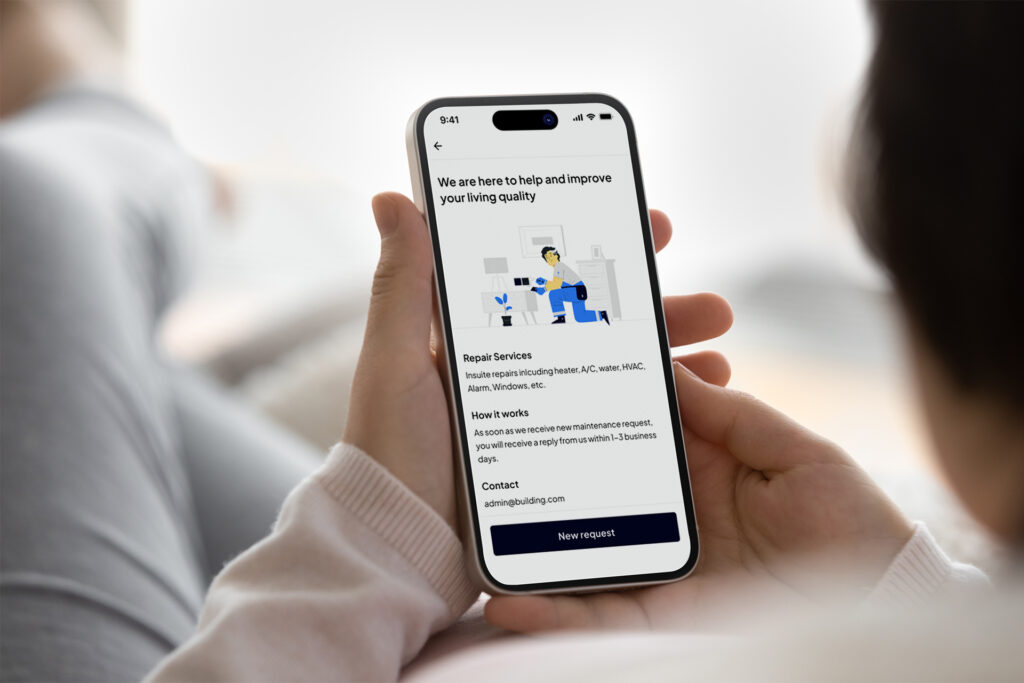
The LIV platform is built for this. It separates common-area maintenance from in-unit service requests, routes work orders to assigned vendors with inspection workflows, and keeps all communication in a single, time-stamped thread. The resident sees their status update. The property manager sees the full operational picture. The board gets the data they need without chasing anyone for a report.
Signal over silence
The buildings that reduce follow-ups and protect resident trust aren’t the ones that fix things fastest. They’re the ones that communicate with structure.
One issue. One source of truth. One update cadence. When expectation is set once and reinforced on rhythm, residents stop chasing updates. They stop filling silence with speculation. And staff stop spending hours managing a communication problem they could prevent with four lines.
Silence creates speculation. Signals create patience.